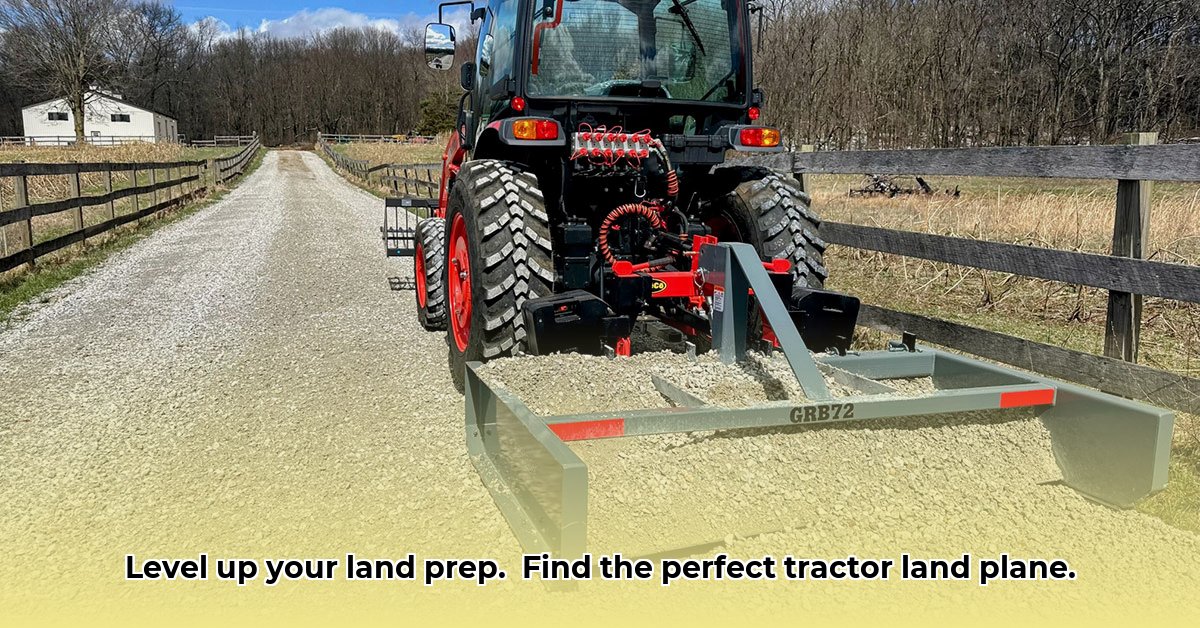
Choosing the right tractor land plane can significantly impact efficiency and project success, whether you're a farmer, road crew, or landowner. This guide compares popular models and provides a step-by-step instructional guide to help you find the perfect fit for your needs.
Understanding Your Needs: Field vs. Road
Before diving into specifications, consider the primary application. Are you preparing farmland for planting, or are you focused on maintaining roads and driveways? The optimal land plane will vary considerably between these applications.
Key Features to Consider
Several crucial features drastically affect a land plane's performance and suitability for different tasks:
Blade Angle: This determines the amount of material moved per pass. A steeper angle moves more material, ideal for tackling larger bumps. Adjustable blades offer flexibility for various conditions and tasks.
Side Plate Length: Longer side plates enhance precision and create a smoother finish, especially crucial for larger projects. They act as "wings," guiding material flow and preventing spillage.
Scarifier Shanks (Tines): These metal teeth break up compacted soil. Essential for preparing farmland, they improve leveling in challenging conditions. Road maintenance typically doesn't require scarifier shanks.
3-Point Hitch: This system connects the land plane to your tractor. Ensure compatibility between the plane's hitch (Category 1 or 2) and your tractor's hitch type (check your tractor's manual).
Skid Shoes: These adjustable components are critical for creating a slight crown on roads, facilitating proper water drainage and preventing potholes. Essential for road maintenance, they are less crucial for field work.
Comparing Popular Models: Deere vs. Other Brands
To illustrate the differences, let's compare John Deere's LP21 series with models from other manufacturers (such as Everything Attachments). John Deere models are renowned for their detailed specifications and adjustable features, offering versatility. Other brands often focus on simpler, more budget-friendly designs ideal for basic tasks.
| Feature | Deere LP21 Series | Generic "Other Brand" Model | Best Use Case |
|---|---|---|---|
| Scarifier Shanks | Usually adjustable, versatile for various soil types | Often absent or fixed; less versatile | Essential for field work; less important for roads |
| Skid Shoes | Often adjustable; crucial for crowned road surfaces | May be fixed or absent; limits road applications | Crucial for road maintenance; less important for fields |
| Blade Adjustability | Usually highly adjustable | May be limited or fixed | More adjustability enhances versatility |
| Detailed Specs | Very detailed specifications available | Usually less detailed specifications; check carefully | Essential for informed purchasing |
| Price | Generally higher end | Likely more affordable | Balance your budget with your needs |
Isn't it crucial to understand the specific specifications before making a purchase? Detailed specifications are key to ensuring the land plane meets your precise needs.
Choosing Your Land Plane: A Step-by-Step Guide
This practical approach will help you navigate the selection process:
Define Your Needs: What is the primary application? Field work? Road maintenance? This significantly narrows your options.
Set Your Budget: Land planes vary significantly in price. Determine a realistic budget before exploring models.
Research Models: Compare specifications and features, considering blade adjustability, scarifier shanks (if needed), and side plate length.
Verify Compatibility: Always confirm the land plane's 3-point hitch matches your tractor's hitch type. Incompatibility can lead to costly errors.
Consider Versatility: Do you need adjustable features like skid shoes or scarifier shanks? Greater adjustability often translates to broader usability.
Read Reviews: Online reviews offer real-world insights and user experiences.
Get a Demo (If Possible): A hands-on demonstration provides firsthand experience with the machine's operation and handling.
Remember, the optimal choice is the one that perfectly aligns with your specific requirements, budget, and intended use. Investing wisely guarantees efficient operation and long-term cost savings. Thorough research ensures you find the ideal tool to achieve perfectly leveled land.
Optimizing Land Leveling for Small Farms
Small farms present unique challenges. Choosing the right land leveler involves considering farm size, soil type, and budget constraints. What are the key factors to consider for small-scale operations? Prioritizing suitability over size is key to avoiding soil compaction and maximizing efficiency.
Key Considerations for Small Farms:
- Land Size and Topography: Smaller farms often require lighter-duty levelers.
- Soil Type: This impacts the type of blade and working depth needed.
- Budget: Set realistic financial limits before searching for models.
- Tractor Compatibility: Ensure your tractor has sufficient horsepower and hitch capacity.
Different land levelers cater to different needs:
| Type of Land Leveler | Pros | Cons | Best Suited For |
|---|---|---|---|
| Blade Leveler | Simple, affordable, effective for light leveling | Not ideal for heavy leveling or rocky terrain | Small farms with relatively flat land |
| Disc Leveler | Aggressive leveling, suitable for removing ridges and furrows | More expensive, higher horsepower requirements | Areas with significant undulations, rough terrain |
| Scraper Leveler | Efficient for moving large amounts of soil, creates smooth surfaces | Requires more power, can lead to excessive soil disturbance | Large-scale projects, serious leveling needs |
| Laser-Guided Leveler | High precision leveling, minimizes soil movement and waste | High initial investment, requires skilled operator | Farms prioritizing efficiency and minimizing environmental impact |
Remember, selecting the right equipment ensures efficient operation and improved soil health, ultimately leading to higher yields. Invest wisely!